
FOR IMMEDIATE RELEASE
Fargo, North Dakota, November 17, 2025 — In the oil and gas industry, corrosion inhibitors are essential for protecting critical infrastructure, particularly pipelines, from the corrosive effects of various components within the oil and natural gas streams. Accurate measurement of amine residual from amine-based corrosion inhibitors is crucial to ensure effective corrosion inhibition, but traditional methods are often unreliable, slow, and ill-suited for the demanding conditions of pipeline operations. ReSpark Innovations’ Chemi-Sense Amine Residual sensor is transforming this landscape by delivering repeatable, field-ready detection of 50-300 ppm amine residuals within 6 hours. This article explores the role of amine corrosion inhibitors in pipeline protection, the challenges of residual measurement, and how this innovative sensor addresses them.
The Critical Role of Amine-based Corrosion Inhibitors in Pipelines
Amine-based corrosion inhibitors are widely used in gas processing to neutralize acidic gases like hydrogen sulfide (H2S) and carbon dioxide (CO2). In pipelines, these and other proprietary blends of corrosion inhibitors form a protective film on metal surfaces, mitigating corrosion caused by acidic and corrosive environments and may be used to control microbially induced corrosion (MIC). Their importance cannot be overstated:
Protecting Pipeline Integrity: Pipelines are the backbone of oil and gas transport, and corrosion can lead to damage, leaks, failures, and costly repairs.
Ensuring Operational Continuity: Effective inhibition prevents issues like foaming and fouling, which can disrupt flow and reduce efficiency. Prevent further damage to pipelines and costly repairs.
Supporting Safety and Compliance: Proper inhibitor management minimizes risks to infrastructure and ensures adherence to corrosion control regulations, and reduces leaks to the environment.
Maintaining optimal residual concentrations (typically 50-300 ppm) in pipelines is critical to achieving these benefits, but accurate and timely monitoring remains a significant challenge.
Challenges in Measuring Amine Residuals in Pipelines
Monitoring amine residuals in pipeline systems is fraught with obstacles that hinder effective corrosion control:
- Harsh and Complex Field Conditions: Pipeline environments are dynamic and harsh, collecting a representative sample of water and inhibitor is complex and difficult in most pipeline systems. Variations in temperature, pressure, and solvent composition further complicate collection and testing of samples, upon completing collection, the residuals continue decay until tested in the lab.
- Delayed and Costly Lab-Based Testing: Traditional methods, such as chromatography, titration or spectrometry, require samples to be collected from pipeline systems and sent to off-site laboratories. This process can take days, risking sample degradation during transport and delaying critical adjustments to inhibitor dosing. In pipeline operations, these delays can exacerbate corrosion and fouling, compromising system reliability.
- Inconsistent Measurements: Achieving repeatable measurements in the 50-300 ppm range is difficult due to interferences from contaminants like acetate, propionate, or metals in the transported products as well as consistent collection and handling of the samples. This variability can lead to over- or under-dosing of inhibitors, increasing corrosion risks or wasting resources in pipeline systems.
These challenges drive up maintenance costs, increase the risk of pipeline failures, and pose environmental and safety concerns due to improper corrosion inhibitor management.
ReSpark Innovations’ Chemi-Sense Amine Residual Sensor: A Pipeline-Focused Solution
ReSpark Innovations’ Chemi-Sense Amine Residual sensor is a groundbreaking tool designed to address these challenges, offering a robust solution for pipeline operators. This advanced sensor delivers repeatable, accurate detection of amine residuals in the critical 50-300 ppm range directly in the field, with results available in under 6 hours.
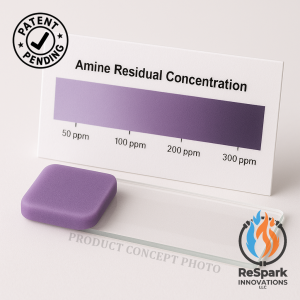
How It Works:
The Chemi-Sense sensor utilizes cutting-edge chemical sensing technology optimized for the rugged conditions of pipeline operations. Its key features include:
- High Sensitivity for Pipeline Applications: Accurately measures amine residuals between 50-300 ppm, ensuring precise monitoring of amine-based corrosion inhibitor levels in pipelines.
- Field-Ready Durability: Built to withstand the harsh environments of pipeline systems, it performs reliably despite common contaminants in crude, natural gas or HVL’s. The provided test kit is similar to a pH test strip but more durable and just as easy to use. While not yet deployable physically into pipeline systems, upgrades are being developed for insertion via a coupon holder systems. This will allow expanded sampling points.
- Rapid, On-Site Results: Delivers actionable data within 6 hours, enabling same shift adjustments to inhibitor dosing without the need for off-site lab analysis.

Benefits for Pipeline Operations
- Enhanced Corrosion Protection: Repeatable measurements ensure optimal inhibitor levels, safeguarding pipelines from corrosion and extending their operational life.
- Improved Efficiency: Real-time data minimizes downtime, prevents foaming and fouling, and maintains consistent pipeline flow.
- Cost Reduction: Eliminates the need for costly lab testing and reduces maintenance expenses by preventing corrosion-related issues and reducing overdosing which can impact process plants and refineries.
- Environmental Compliance: Precise residual control minimizes amine overuse, reducing waste, preventing leaks and supporting regulatory compliance.
By integrating the Chemi-Sense sensor into pipeline operations, companies can optimize corrosion inhibitor performance, enhance system reliability, and protect critical infrastructure.
Advancing Sustainability and Pipeline Resilience
The Chemi-Sense sensor goes beyond solving measurement challenges—it supports a more sustainable and resilient oil and gas industry. By providing accurate, on-site data, it enables pipeline operators to optimize amine-based corrosion inhibitor usage, reduce downstream impacts from overdosing systems, and meet regulatory requirements. As the industry faces growing demands for sustainability and operational efficiency, tools like this are essential for maintaining a competitive edge.
Call to Action
The challenges of measuring amine residuals in pipelines are significant, but ReSpark Innovations’ Chemi-Sense Amine Residual sensor offers a transformative solution for corrosion management. If you’re involved in pipeline operations or seeking to optimize and verify corrosion control, this technology could be a game-changer.
Let’s connect on LinkedIn! Share your challenges with amine-based corrosion inhibitors or pipeline monitoring in the comments, or reach out to discuss how the Chemi-Sense sensor could benefit your operations. What strategies are you using to protect your pipelines? What other corrosion inhibitors are you looking for a rapid accurate field measurement for? I’d love to hear your insights!
For immediate release November 17, 2025